Essay
The language of roses
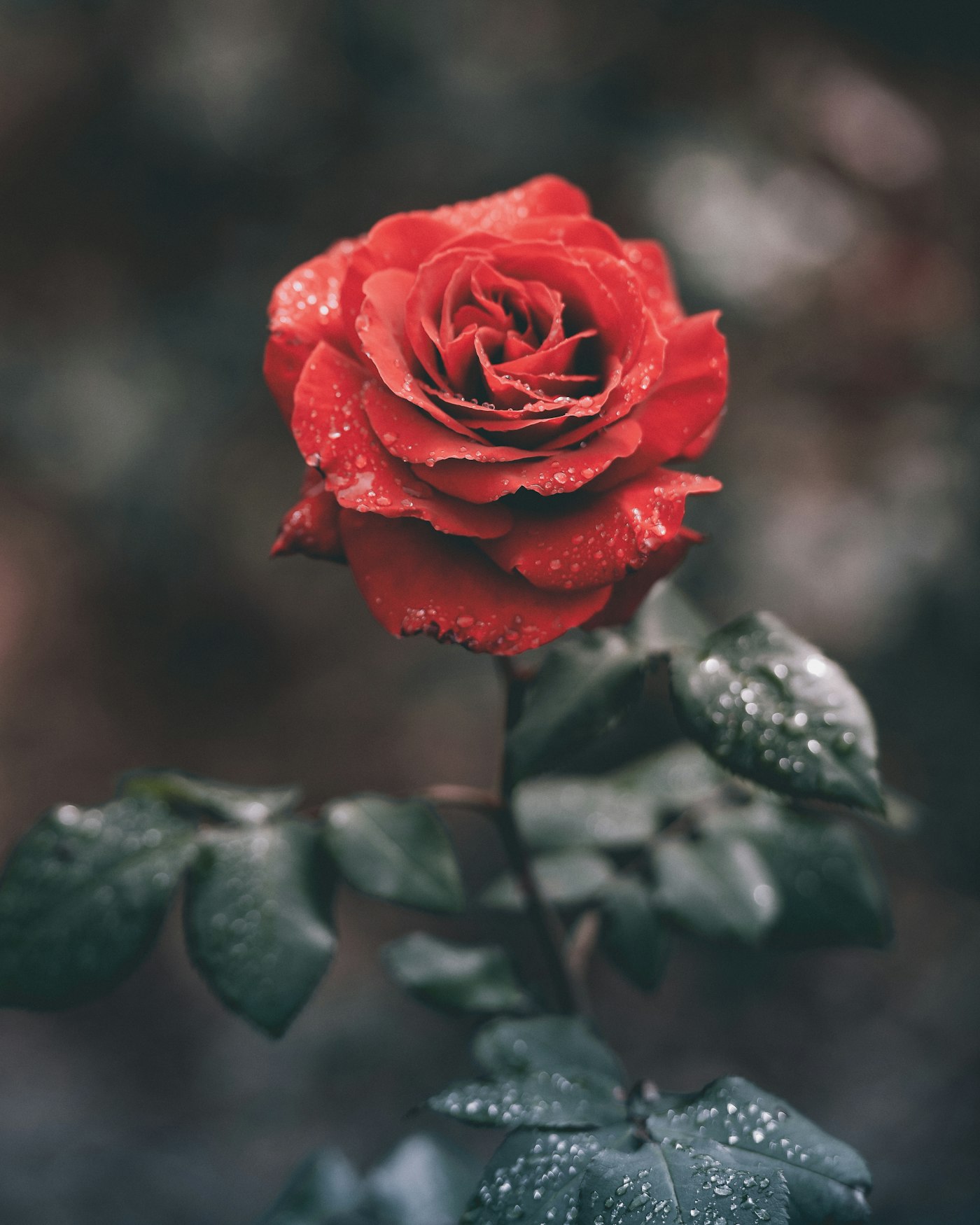
A rose can say almost anything, which is why it so often says nothing. The long-stem red hybrid tea became a default: identical heads, no perfume, a spiral so tight it looks manufactured. It photographs well and dies without ever smelling like a garden.
Garden roses speak differently. The cup is loose. The outer petals bruise. The centre is a muddle of smaller petals rather than a pointed bud. David Austin forms, old shrub roses and a few stubborn once-bloomers still carry that mix of tea, lemon peel and something close to fruit. That is the language we try to keep in the collection we call Garden Cup.
Red is not automatically romance. A dark crimson rose on a winter table can read as formal, even severe.
Colour, without the script
Blush and apricot are quieter and often more intimate. White is not purity so much as light: it lifts a dark foliage study and keeps a dinner from feeling heavy. Yellow is difficult in rooms with warm lamps; it can turn cheap. We use it when the daylight is honest, or not at all.
We rarely send a dozen of one variety. One or two open cups, a tighter bud for tomorrow, and a foliage that does not compete is enough. The bouquet should look as if it was cut from one garden at one hour. That is also why we refuse the forty-item builder: a list is not a language. A list is a warehouse.
At home
Recut roses the evening they arrive and give them a deep drink before they go on the table. Guard petals can come off. The calyx stays. Keep them away from a bowl of fruit — ethylene is not a metaphor, it is a gas. If the neck bends, the stem was cut too late or the water was left stale. There is a shorter checklist on the care page.