Rooms
A table for twelve
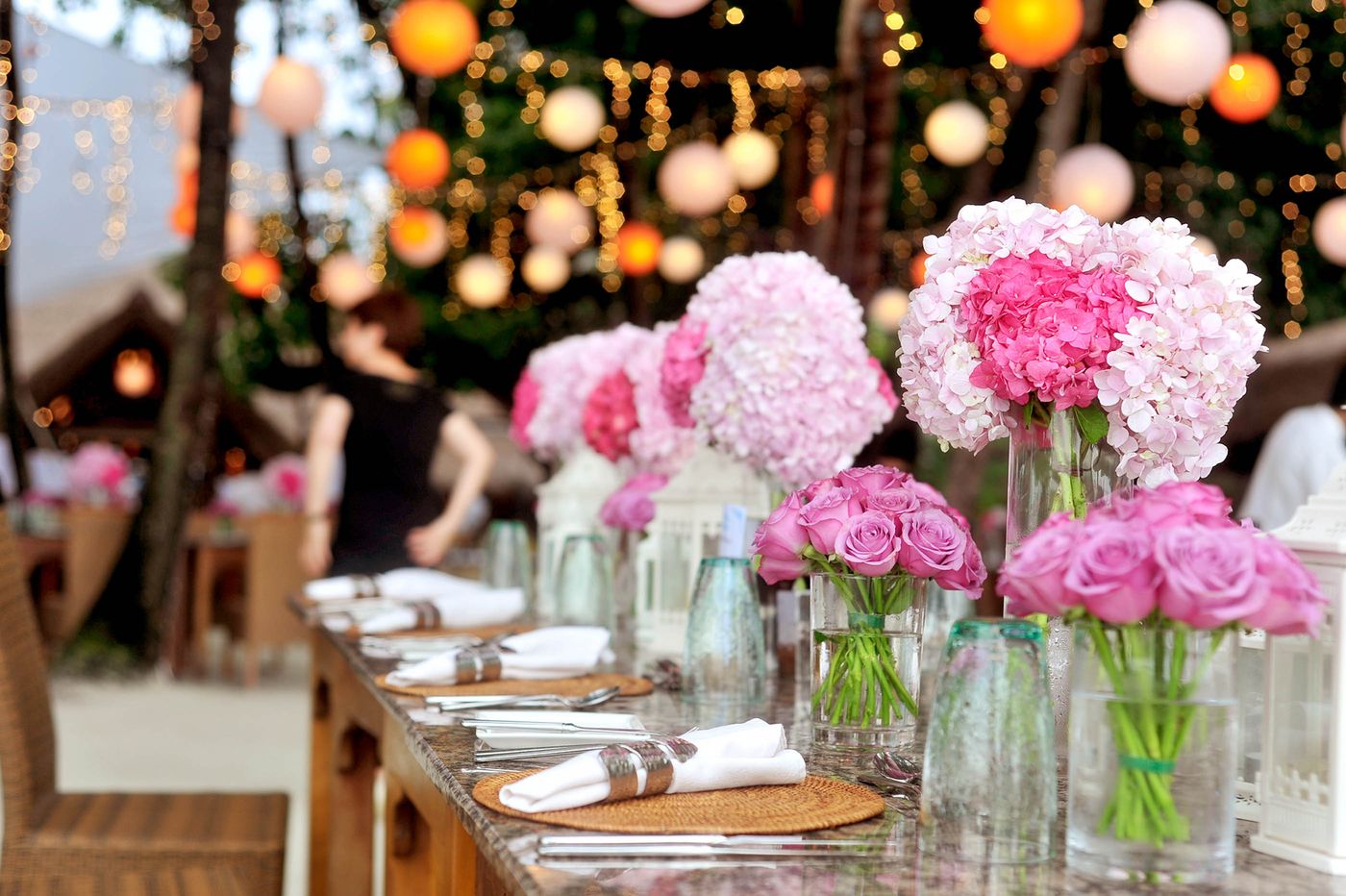
A dinner fails in the first ten minutes if nobody can see the person opposite. Flowers are often the reason. We plan a table for twelve as a conversation with glassware, candle heat and the length of the cloth — not as a chance to empty the cooler onto a runner.
The first measurement is sightline. If a guest has to lean around a dahlia to pass the salt, the arrangement is too proud. Low bowls down the centre, or a broken line of smaller vessels, will do more than one heroic centrepiece. Height can exist at the ends, or on a sideboard, where nobody has to speak through it.
Candle heat is a second sun. Place it as carefully as you place the window.
Heat, water, time
Twelve people make a room warmer than the studio. Soft stems suffer. We condition longer, choose slightly tighter heads, and keep water reservoirs larger than they look. Foam is still refused: a four-hour dinner is exactly when a stem needs to drink. If the room runs past midnight, we plan a second water top-up after the main course. That is not fussy. That is how Late Fire stays late.
Palette comes after architecture. A rust autumn table can take copper beech and fewer flowers. A spring table can take scent, but not so much lilac that the first course tastes like perfume. We ask how the food is plated. White plates forgive more colour. Dark stoneware wants lighter stems or it all sinks.
When to stop
The last stem is the one you do not add. Assistants learn this the expensive way. If the table already has a rhythm — bowl, candle, bowl, candle — an extra rose in the gap is not generosity. It is anxiety. We would rather leave a little cloth visible. The room should still look like a place to eat.
If you are planning a dinner, send the date, the table length, the vessel you already own, and how late the room runs. We answer from the week’s market, as described in the atelier note and the season calendar.